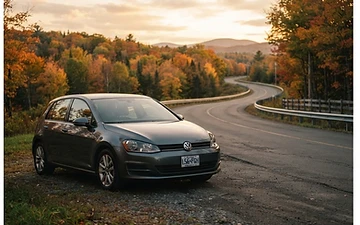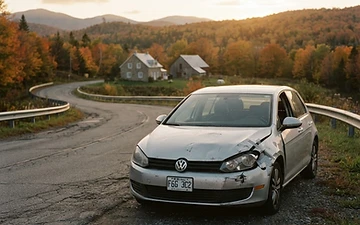
Most sellers assume they must pass a SAAQ mechanical inspection to offload their vehicle, but that is rarely the case for a private sale between two individuals in Quebec. Unless the vehicle has been stored for more than 12 months or was previously declared a total loss, the burden of the mechanical inspection falls on the buyer after the transfer. If you want to sell car without a safety certificate, you are perfectly within your rights as long as you are transparent about the vehicle's condition, including any apparent defects that might affect its ability to pass a future inspection.
I recently helped a client in Trois-Rivières dispose of a 2012 Honda Civic with a persistent check engine light and failing struts. He had been trying to get it through a garage inspection for weeks, spending over $800 on repairs only for the mechanic to find something else wrong. We took it as-is. Because he didn't try to hide the faults, the sale was straightforward. We checked the Canadian Black Book values, adjusted for the necessary repairs, and he walked away with a fair cheque that same afternoon without worrying about the inspection certificate ever again.
When the certificate is mandatory
Under the SAAQ regulations, a safety certificate is not generally required for a standard transfer of ownership between private parties. However, there are exceptions. If you have taken a vehicle off the road and kept it in storage for more than 12 consecutive months, the SAAQ will demand a mechanical inspection before they allow you to renew the registration. Similarly, if you are selling a vehicle that has been designated by an insurer or the SAAQ as 'rebuilt' or 'salvage' following a major collision or flood, a certificate is non-negotiable.
Most buyers in cities like Montreal, Quebec City, or Laval will ask for a safety inspection as a condition of sale if they are financing the purchase or if they are wary of hidden structural damage. If your vehicle is older than 10 years, some insurance companies may also request a mechanical compliance report before they agree to provide coverage, though this is a private contract between the buyer and their insurer, not a SAAQ mandate.
Selling as-is: what that means legally
In Quebec, 'as-is' is more than just a phrase; it is a legal reality. When you sell a vehicle without a certificate, you must be clear in your written agreement—even if it is just a simple bill of sale—that the buyer accepts the car in its current state, including any apparent or hidden mechanical defects. You are legally obligated to disclose any known faults, such as a cracked frame, airbag deployment history, or major transmission slips. If you fail to disclose a major defect that you were aware of, the buyer can technically sue you for hidden defects (vices cachés) even after the transaction is finalized.
I always recommend my clients pull a Carfax report before putting a car on the market. It costs about $50 but saves you from 'I didn't know that' arguments later. By showing the history, you are protecting yourself. If the report shows an accident, be honest about it. The buyer can choose to refuse the vehicle based on this history, but they cannot claim later that you deceived them regarding the car's provenance.
What a buyer can refuse without it
When you sell a car without a safety certificate, you shift the risk of the inspection process onto the buyer. A buyer can rightfully refuse to complete the deal if they discover that the car requires significant repairs to become roadworthy. They are looking at three main things: frame integrity, brake system status, and steering components. If these are compromised, the cost of the inspection is the least of their worries; the cost of parts and labor can quickly exceed the value of an older vehicle.
Some buyers will use the absence of a certificate as a bargaining chip to slash your price by $1,000 to $2,000. They might claim that because they have to arrange for towing and a garage visit, the 'risk' warrants a discount. Do not be intimidated. If you have priced the vehicle based on the current market value for a non-certified car, hold your ground. Be prepared for a buyer to walk away if they are looking for a turn-key vehicle; those buyers are not your target audience.
The fair price for a car without a certificate
Pricing a vehicle without a certificate requires a cold, hard look at the Canadian Black Book. First, find your car’s wholesale or trade-in value. From that number, deduct the estimated cost of a safety inspection (usually $150 to $300) plus the cost of any 'obvious' repairs—worn tires, burnt-out bulbs, or a cracked windshield. If the car is clearly near the end of its life, the value shifts toward the weight of the metal.
Remember that in Quebec, you also have to account for the QST (Quebec Sales Tax) during the SAAQ transfer. If the price is too low, the SAAQ may tax the buyer based on the book value rather than your sale price, which can frustrate them. Always keep your pricing within a reasonable range of the market average. If you are struggling to find a buyer, Vendre Auto Québec covers the entire province, from Gatineau to Saguenay and Sherbrooke to Lévis. We evaluate your car based on its real-time condition, not just the year and model, and provide a transparent offer.
FAQ
Does the SAAQ require a bill of sale for the transfer? Yes, you need a signed transfer of ownership form. The SAAQ will collect the QST at the time of the transfer.
Can I sell a car that doesn't run? Yes, but you must be transparent. A vehicle that doesn't start or drive is valued as a parts car. You will likely need to arrange for a flatbed tow to move it to the buyer's location.
How do I get paid safely? Always insist on a certified cheque, a bank draft, or a personal cheque that clears through a reputable dealer service. Avoid cash deals where possible to maintain a clear paper trail for the SAAQ.
Ready to get a fair offer for your vehicle regardless of its current condition? Contact us for a free estimate today. We compare prices across multiple platforms to ensure you get a competitive market value, and we finalize all transactions with payment by personal cheque the same day. Whether you are in Trois-Rivières or anywhere else in Quebec, we handle the logistics.
Keep going
- Sell your car in Quebec — your used vehicle buyer, payment by personal cheque.
- Vehicle trade-in in Quebec — trade-in and buyout service for dealers.
- Free vehicle estimate — get a firm offer by personal cheque, same day.
- Selling your used car in Trois-Rivières — our used vehicle buying service in Trois-Rivières and the area.
- Contact us — talk to our broker, anywhere in Quebec.
- About Vendre Auto Québec — our broker role comparing market prices.
- Sell your Toyota Highlander 2016 in Quebec
- Car trade-in in Montreal: what your car is worth
- Selling a car with a remaining loan in Quebec
Selling your ?
We compare market prices to offer you the best price. Free estimate, fast payment by personal cheque.